
At fortheworld OÜ, our mission is to build & integrate digital tools that make a tangible impact. We believe in transparency, which is why we are building our entire portfolio in the open. Today marks a significant step in that journey as we pull back the curtain on the infrastructure for sustainable.day.
While the main hub for sustainable.day will eventually host our deep-dive articles and stories, the engine that powers it is now live.
The sustainable.day Launch Summary
Today, we integrated and deployed five key service pillars. Each one is designed to make the sustainable travel experience more accessible, transparent, and connected:
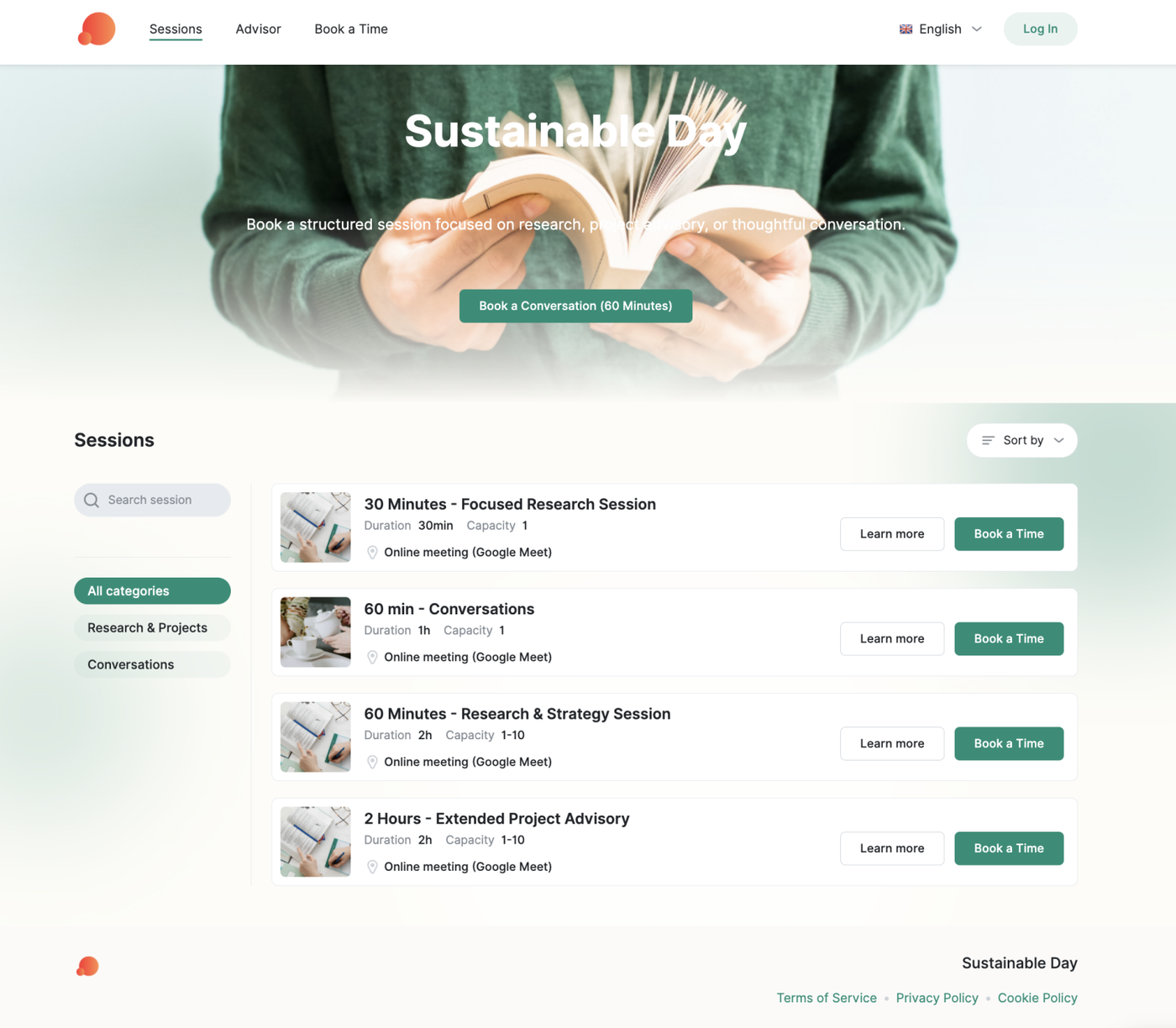
- Booking Hub (meet.sustainable.day): A streamlined interface for "Work" and "Life" sessions, allowing partners and friends to connect with us instantly.
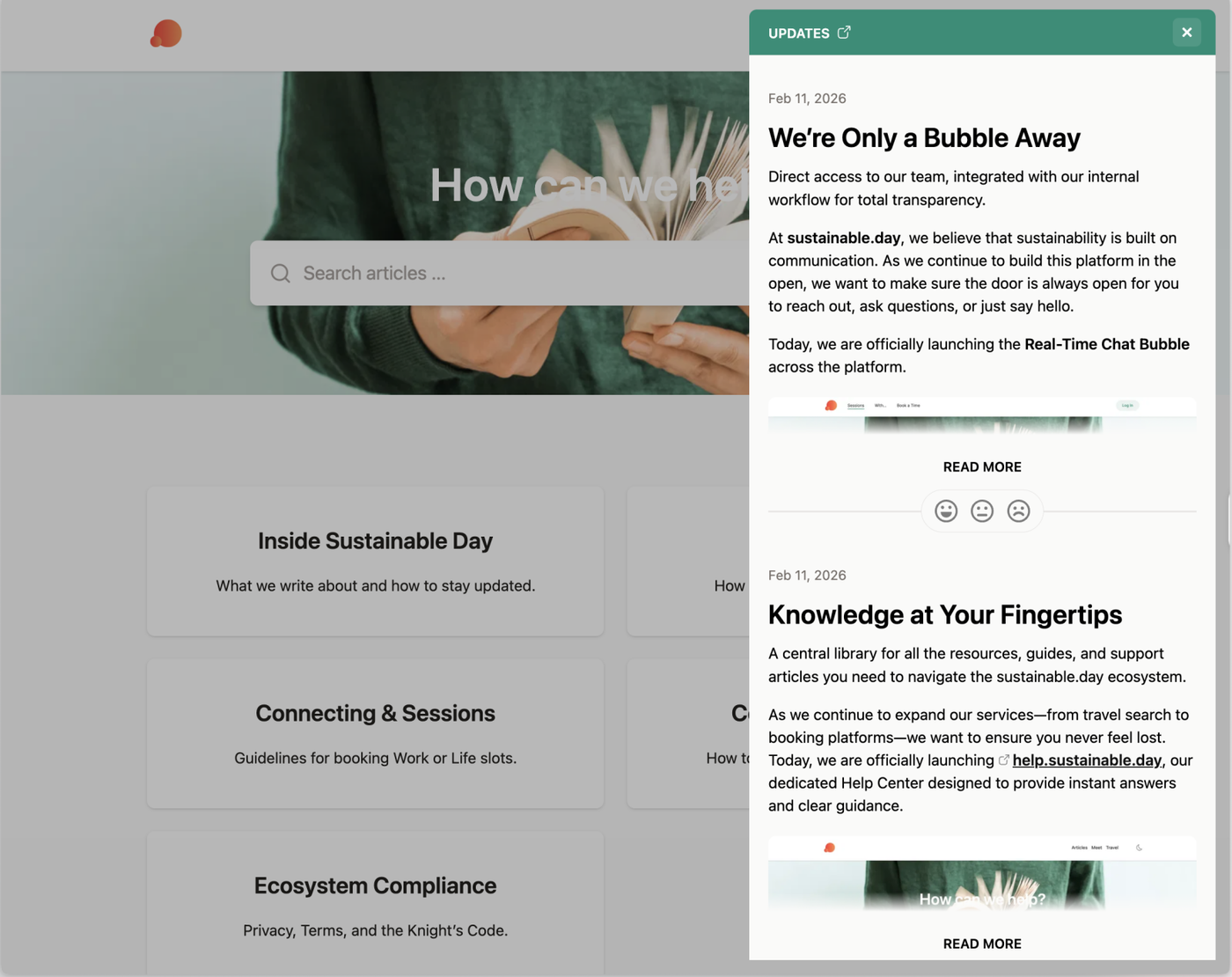
- Knowledge Base (help.sustainable.day): A centralized support center to guide users through our growing ecosystem.
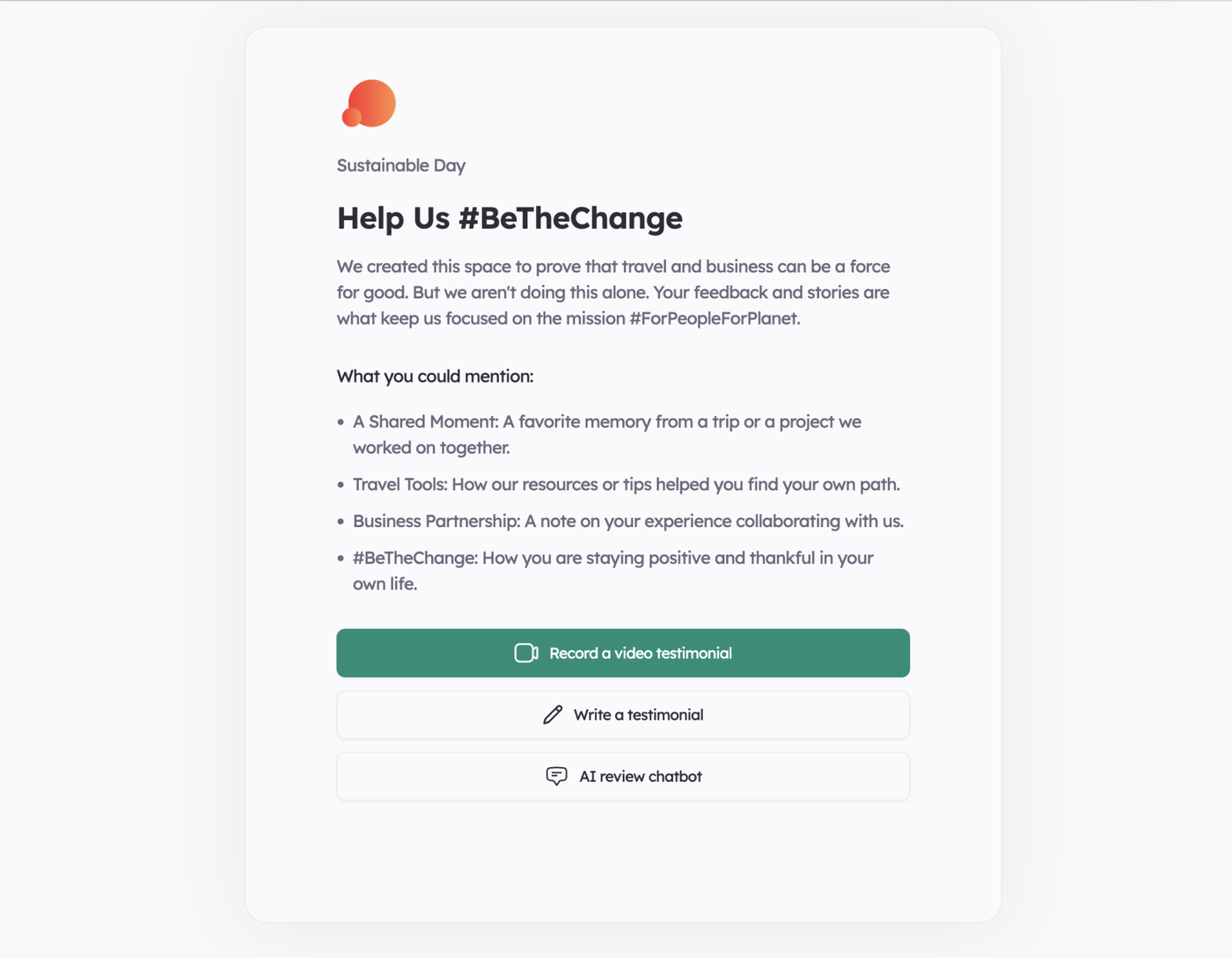
- Feedback Engine (voice.sustainable.day): An innovative space for video and AI-guided testimonials to hear from our community.
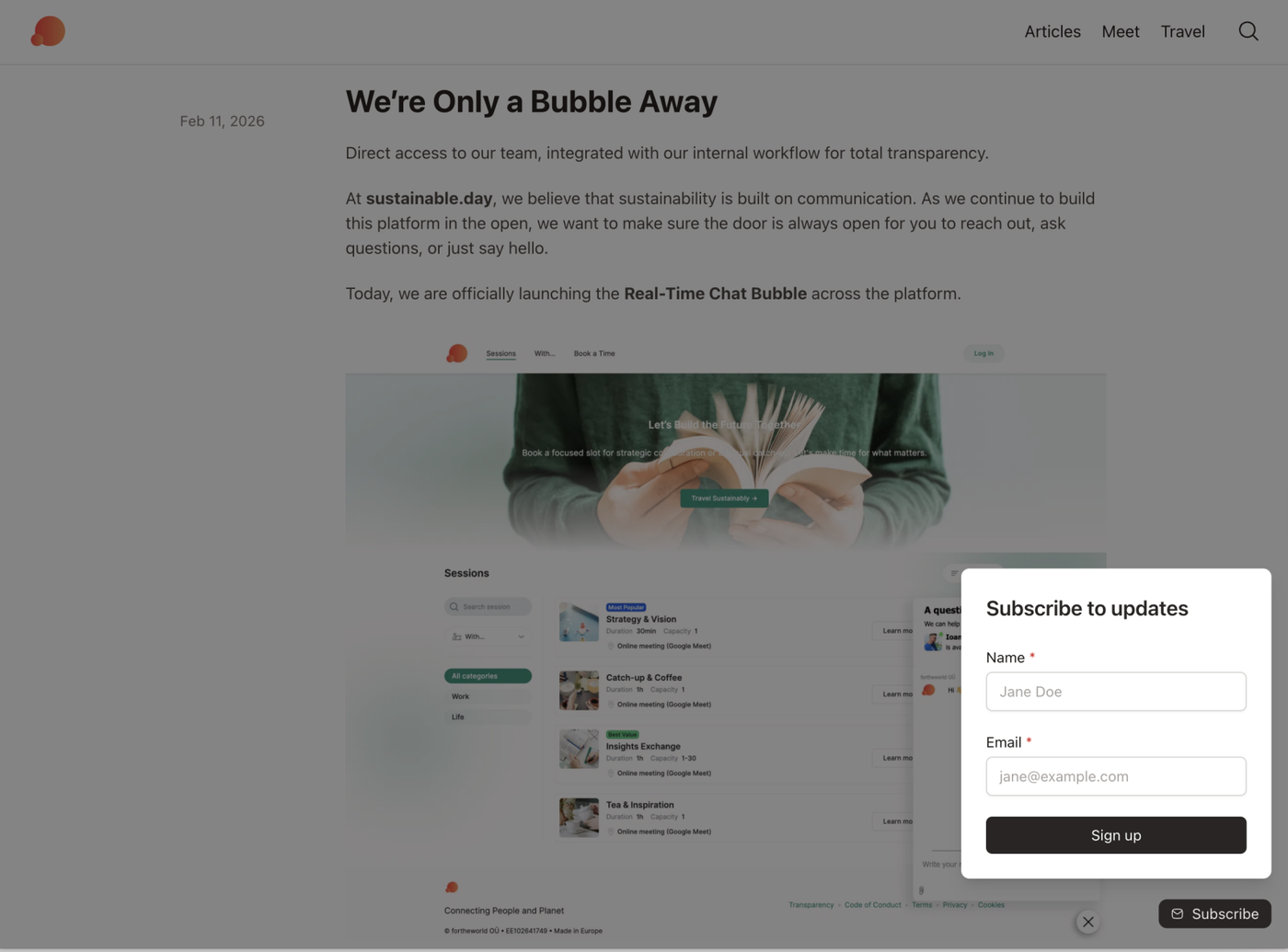
- The Logbook (open.sustainable.day): A dedicated transparency page where every technical update for this project is recorded.
Building in the Open
Why launch the integrations before the articles? Because at fortheworld OÜ, the process is just as important as the product.
By opening these sub-domains now, we allow our community to see how we scale, how we solve technical hurdles, and how we integrate diverse services into a cohesive brand experience. This "Building in Public" philosophy will extend across all our domains—from sustainable.report to development.city.
What’s Next for fortheworld OÜ?
This is just the first of many updates you will see here on forthe.world. As we continue to develop our other projects, this site will serve as the "Parent Log," the high-level view of everything happening across our entire portfolio.
The foundation is laid. Now, we begin to tell the stories.
Ioan Adrian Flucus Founder, fortheworld OÜ